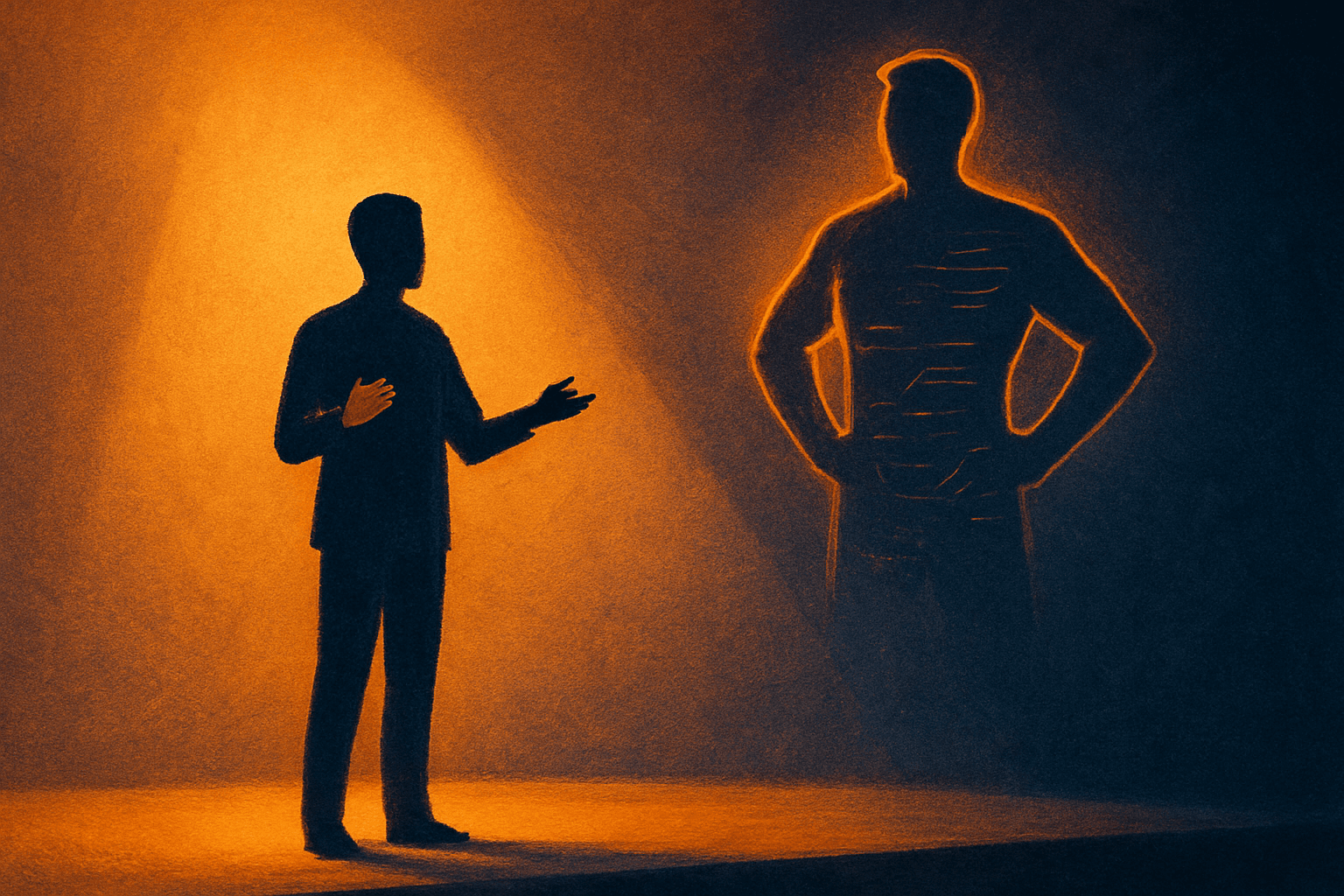
The Expert Paradox: How I Accidentally Became a 'Tech Guy'
July 18, 2025 • by Samuel Holley
Coffee with a Pastor
I walked into a meeting trying to convince a pastor I wasn't a tech expert. I walked out having been introduced to her staff as "the tech guy." That single conversation revealed a profound truth about how the world works, and it has changed how I see myself entirely.
My goal was simple: to explain my work in a way that was accessible. "I'm not really a techie," I told her, "but I believe AI is a tool so simple and powerful that everyone should be able to use it." I was being honest about my own journey—the learning curve, the frustrations, the feeling of being a guide for other non-experts.
But what she heard was something different. And it led me to this realization:
The Expert Paradox
People do not respond to your internal state of self-doubt. They respond to the energy and clarity you project.
Pastor Michelle didn't hear my disclaimer. She heard the passion in my voice. She felt the confidence I had in my mission. She saw the clarity of my strategic insights. Her brain took that data and filed it under the simplest available category: "expert."
A Second Proof
I saw this happen again just a few days later. I made a high-anxiety phone call to a potential landlord. Instead of hedging, I just said, "I'm confident this is the right place." Her immediate response was, "YES! THE ANGELS ARE SPEAKING!" She didn't just hear my words; she felt my certainty and mirrored it back to me as a spiritual sign.
Reclaim by Design™ Takeaway
For years, I operated as a "Translator," meticulously managing every word, terrified that people would discover the fraud I felt I was. What I'm learning now is that when you speak from a place of authentic passion and hard-won insight, people don't see the flaws. They see the authority.
People don't respond to your self-doubt; they respond to the clarity you project.
This is Reclaim by Design™ in action. You do not need to feel like a flawless expert to be perceived as one. You need clarity, conviction, and the willingness to be honest about your own learning curve. The vulnerability is not a weakness. It is—paradoxically—what makes you the guide people actually trust.